Insights · Branding
If they can't spell it, they can't find it
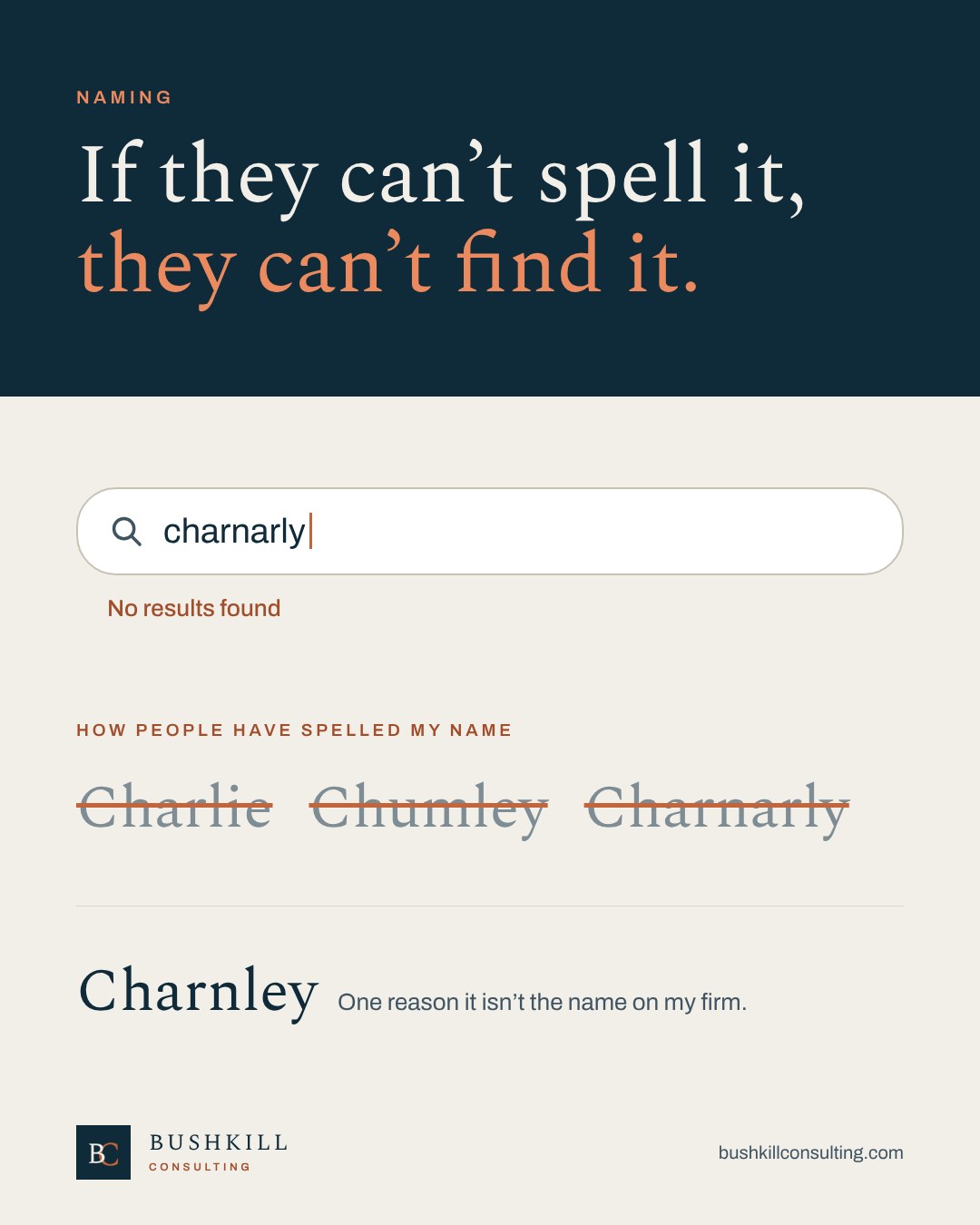
My last name gets spelled Charlie, Chumley and Charnarly. When I was naming my consulting firm, I ruled it out partly for that reason.
A name only works if people can find you with it. That sounds obvious, but a lot of brand and product names get chosen in a room where everyone has already seen the name written down. Nobody in that room has to guess how it's spelled. Your customers do.
Two places a hard name costs you
On Google
A customer hears your name once, from a friend or a podcast, and types their best guess into a search bar. If the guess is close, Google may catch it. If it isn't, or if your name is also a common word, a band or a town, they land on someone else's page. You never find out they were looking.
On your own website
This one gets less attention and costs just as much. Someone on your site types what the product is, not the clever name you gave it. They search "lip balm" and your product is called "Midnight." The search comes back empty, and they don't try a second time. They leave thinking you don't carry it.
A quick test before you commit
Say it out loud and ask them to spell it
Pick someone who has never seen the name. Say it once, the way a customer would hear it from a friend, and ask them to write it down. If most people get it wrong, most customers will too.
Search it today
Look at the first page of results. If it's full of a band, a town, a common word or another company, you'll be competing with that for as long as you have the name.
Ask whether it makes sense on its own
Without the logo, the package or the photo next to it, does the name give anyone a clue what you sell? It doesn't have to describe the product, but it shouldn't need a picture to make sense.
Need a hand with this? I help brands test names before launch and fix search for the ones already out there. Let’s talk →
Already living with a name like this?
Renaming is rarely the answer. Most of the problem can be fixed around the name instead.
Put plain words in your product titles
"Midnight" becomes "Midnight Mint Lip Balm." The creative name stays, and the words people actually search for sit right next to it.
Teach your site search the misspellings
Most site search tools let you add synonyms. Load in the common misspellings of your brand, the generic terms for each product, and the words customers use that you don't.
Read the searches that found nothing
If your search tool reports searches that returned no results, read that list every month. It's your customers telling you, in their own words, what they expected to find.
Write page titles for what people type
Your page titles and headings should use the words a customer would search for, not only your internal names. That helps Google and your own search at the same time.
Creative is fine. Findable matters more.
Not sure how findable your brand is?
Send me your site address. I'll search for you the way a customer would and tell you what I find.